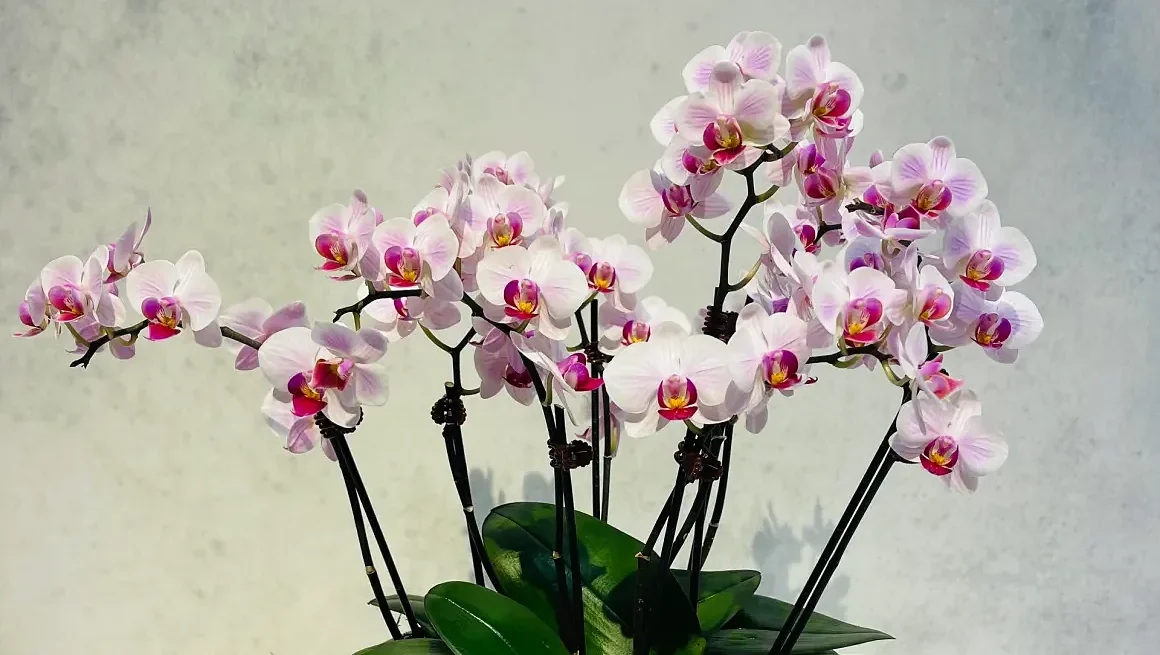
Reading Your Orchid’s Leaves: What Color and Texture Tell You
Your orchid’s leaves are the fastest read on its health. Dark green leaves want more light. Yellow or red-tinged leaves are getting too much. Wrinkled, floppy leaves point to a root or watering problem. Learn these three signals and you will catch orchid leaves problems before they turn serious.
The leaves talk before the flowers do. A weekly glance keeps you ahead of trouble.
What healthy orchid leaves look like
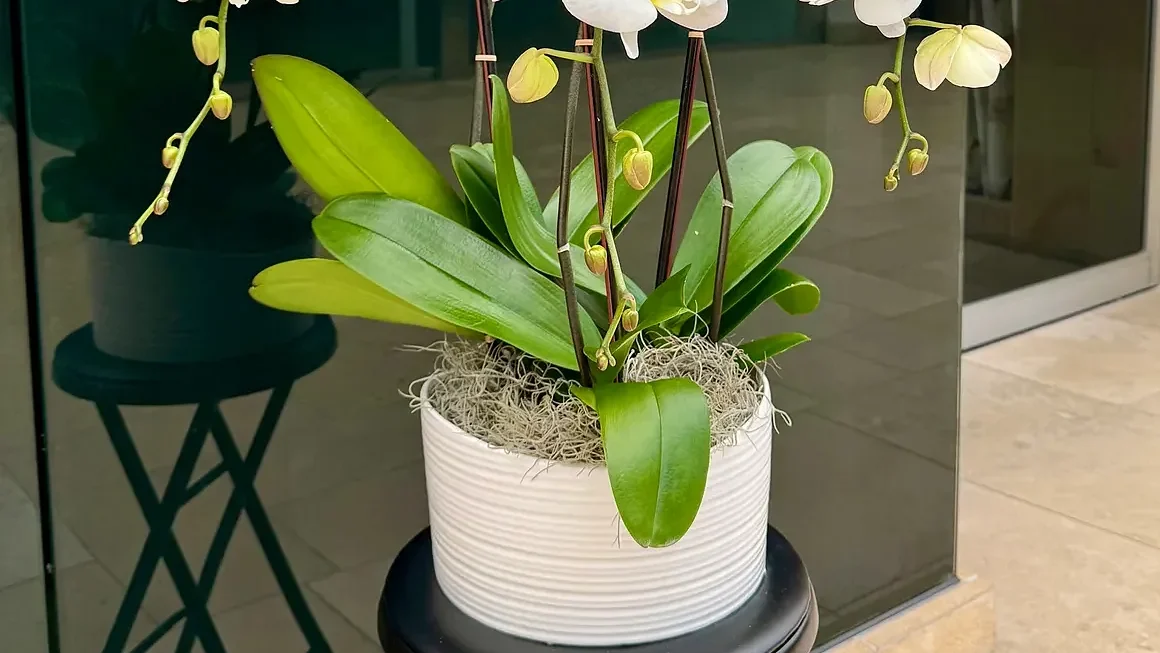
A healthy Phalaenopsis leaf is a medium grassy green, firm, and slightly glossy. It holds itself up with a gentle arch. New leaves grow from the center over the year. Two or three strong leaves support a good bloom.
Use this as your baseline. Once you know the normal look of your plant, changes stand out early.
Dark green leaves mean too little light
Deep, dark green leaves look lush, but they signal a light shortage. The plant makes extra chlorophyll to catch what little light it gets. Rich color with few flowers is the classic pattern.
Move the plant to a brighter spot with indirect light. An east window works well in Sarasota. Over a few weeks the new growth shifts to a lighter, healthier green, and blooms follow.
Yellow or red leaves mean too much light
A yellow, washed-out leaf, sometimes with a red or purple flush, means the plant gets more light than it wants. Direct afternoon sun through glass is the usual cause. Bad cases show dry, tan sunburn patches with no recovery.
Pull the plant back from the window or add a sheer curtain. Trim badly burned tissue only if it turns mushy. Firm tan scars are cosmetic and fine to leave.
Wrinkled or limp leaves mean a root problem
Soft, wrinkled, droopy leaves look like thirst, but the cause is usually underneath. Damaged roots fail to move water up to the leaves, so they go limp even in a wet pot. Overwatering and root rot are the common culprits.
Slide the plant out and check the roots. Firm, green or silver roots are healthy. Brown, soft, stringy roots have rotted. Trim the dead ones with clean scissors, repot into fresh bark, and water lightly while new roots grow.
Spots, cracks, and other marks
A single crack across a leaf is often old physical damage, nothing to treat. Black, wet, spreading spots point to a fungal or bacterial issue, more likely in still, humid air. Improve airflow, keep water off the leaves in the evening, and remove a badly infected leaf with a clean cut.
Yellowing of the lowest leaf alone, slow and one at a time, is normal aging. The plant sheds an old leaf as it grows a new one. No action needed.
Turn leaf-reading into a habit
Look at your plant when you water it. Ten seconds a week keeps you ahead of trouble. Color tells you about light. Firmness tells you about roots and water. Marks tell you about airflow and handling. Three quick reads, once a week.
Should you cut a damaged leaf?
Cut a leaf only when it is mostly gone. A firm leaf with a small mark still feeds the plant, so leave it. Remove a leaf when it turns yellow and soft across most of its length, or when a black rot spreads toward the crown. Use clean, sharp scissors and cut close to the base.
Never pull a leaf off. Tearing opens a wound at the crown, the worst place for rot. A clean cut heals better. Dust the cut with a little cinnamon, a gentle natural antifungal, if you are worried about spread.
Firm wrinkles versus soft rot
Two leaf problems look alike at a glance but call for opposite fixes. Firm, leathery wrinkles with dry roots mean the plant needs water. Soft, limp wrinkles with brown, mushy roots mean the plant has too much water and rotting roots.
Always check the roots before you water again. Watering a rot problem makes it worse. The leaves alone mislead you at times, but the roots tell the truth. Firm and green or silver means healthy. Soft and brown means trouble.
Keep a simple record
If a plant puzzles you, jot the date and what you see. A note or a phone photo each week shows the trend. A leaf slowly yellowing over a month is normal aging. A leaf going soft in days needs action. The record turns guesswork into a clear read.
When to worry, and when not to
Most leaf changes are slow and harmless. One old leaf yellowing at the bottom while new leaves grow up top is normal. Step in only when change comes fast or spreads. A leaf going soft in days, a black spot creeping toward the crown, or several leaves wrinkling at once all call for a root check and a fix. Slow and steady is fine. Fast and spreading is your cue.
When a leaf has you stumped, send a photo or bring the plant to the shop in Sarasota. We read orchid leaves all day and we are glad to help.
Keep reading: how to water an orchid, repot an orchid, and the Orchid Care page.


Have an orchid question? Come see us.
Stop by the shop in Sarasota or send a note — we love talking orchids and helping yours thrive.
Visit the shop