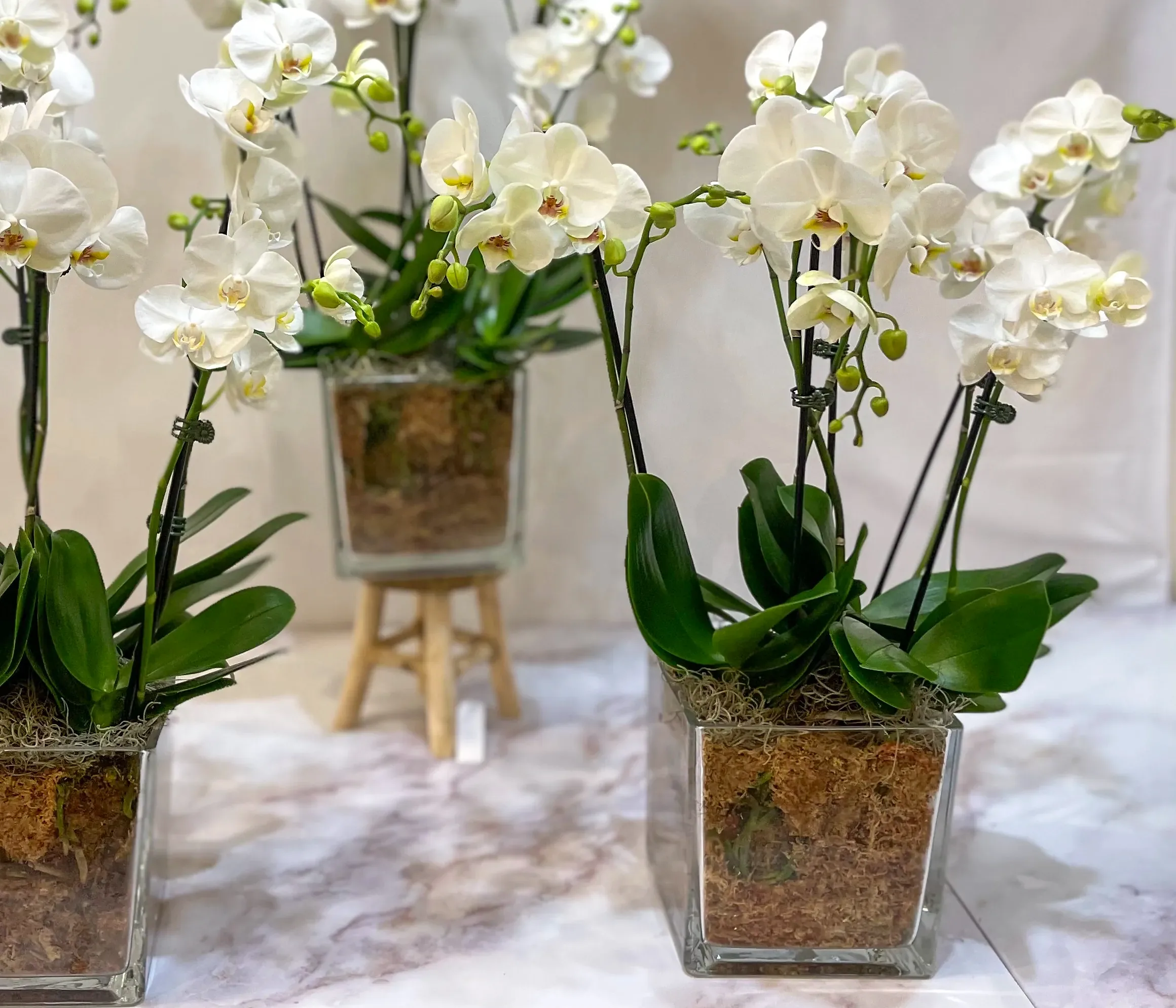
Orchid Care in Florida Humidity
Florida humidity works in your orchid’s favor. In a Gulf Coast home, water less often, keep the air moving, and let the roots dry between drinks. The moist air does part of the job for you, so the biggest risk here is watering on a mainland schedule and drowning the roots.
Orchid care in Florida is easier than up north once you adjust the water.
Why Florida is good for orchids
Orchids come from warm, humid places, so Sarasota suits them. Outdoor summer humidity often sits well above half, close to what many orchids want. Warm nights and long days match their native rhythm better than a dry northern house ever would.
The upshot is simple. Your plant loses water slower here, so it needs less from you. Lean on the climate instead of fighting it.
Water less than the label says
Most care tags assume a dry indoor home. In humid Sarasota air, bark holds moisture longer, so weekly watering often becomes every ten days. Check the roots and the weight of the pot before each drink. Silver roots and a light pot mean water. Green roots and a heavy pot mean wait.
Air conditioning changes the math indoors. A cool, dry, conditioned room pulls moisture out faster than a warm porch. Read the plant, not the calendar.
Keep the air moving
Still, damp air invites rot and spotting. Airflow is the fix. A ceiling fan on low, an open window on mild days, or a small clip fan near your plants keeps leaves dry and roots healthy. Movement matters more indoors, where the air conditioner leaves pockets of stale, moist air.
Space your plants a little apart too. Crowded leaves trap moisture between them. A few inches of gap lets each plant breathe.
Watch for humidity problems
High humidity has a downside if the air sits still. Black spots on leaves, soft rot at the crown, and fungus on the mix all show up in stagnant, wet conditions. Keep water off the leaves and crown in the evening. Wet tissue overnight is where rot starts.
If you see a spreading black spot, remove the leaf with a clean cut and improve airflow right away. Dry air overnight and moving air by day keep most of these issues off the plant.
Summer heat and light
Summer sun through glass is strong on the Gulf Coast. Bright, indirect light still rules. An east window gives morning light without the harsh afternoon load. A south or west window needs a sheer curtain from late spring through summer, or the leaves scorch.
Outdoors, a shaded porch works well in the warm months. Dappled shade under a tree or a screened lanai gives good light and steady airflow. Bring plants back in before the first cool snap in late fall.
A Gulf Coast summer routine
Keep it simple through the humid months. Check the roots twice a week and water only when they signal thirst. Run a fan for airflow. Keep leaves dry overnight. Give bright, filtered light. Feed lightly once a month. The climate carries the rest.
By fall, watch for cooler nights, since the shift sets up the next round of blooms.
Growing orchids outdoors in summer
Sarasota summers suit orchids outdoors, with care. A shaded porch, a screened lanai, or a spot under a leafy tree gives bright, filtered light and steady airflow. Keep plants off direct midday sun, which scorches leaves fast in our strong light.
Water more often outside, since breeze and warmth dry the bark quicker. Check the roots every couple of days. Watch for the same rules as indoors. Let the bark dry between drinks and keep water off the crown at night.
Bring them in for cool snaps and storms
Orchids handle heat but not cold. Bring plants indoors before any night near 50 degrees, which happens a few times each winter here. A single cold night damages leaves and buds.
Storm season calls for a plan too. When a strong storm or hurricane threatens, move outdoor orchids inside well ahead of the wind. Set them in a bright room and return them outside once the weather clears. A little lead time protects a plant you have grown for years.
Humidity worth measuring
If you like numbers, a cheap hygrometer takes the guesswork out. Orchids do well between 50 and 70 percent humidity. Outdoor Sarasota air often sits in this range or above. Indoor air conditioning drops it, so a grouped tray of plants or a nearby pebble tray lifts it back up. Read the meter, then adjust airflow and grouping to suit.
The one rule to remember
If you take away a single idea, let it be this. In Florida, underwater before you overwater. The humid air forgives a dry plant far more easily than a soggy one. When the choice is water now or wait, wait.
Growing orchids on the Gulf Coast rewards a light hand at watering. Visit the shop in Sarasota with questions about your setup and we will walk through it.
Keep reading: how to water an orchid, get your orchid to rebloom, and the Orchid Care page.

Have an orchid question? Come see us.
Stop by the shop in Sarasota or send a note — we love talking orchids and helping yours thrive.
Visit the shop