When and How to Repot an Orchid
Repot an orchid every one to two years, in spring, once it finishes blooming. Do it when the bark breaks down, the roots outgrow the pot, or the mix stays soggy. Slide the plant out, trim dead roots, and settle it into fresh bark in a pot with drainage. Skip repotting on a whim, since the move sets the plant back for a while.
An orchid likes to be a little snug. Repot for a real reason, not out of habit.
When should you repot an orchid?
Three signs say it is time. First, the bark mix has broken down into a dense, soggy mush, holding too much water. Second, roots climb well over the pot rim or circle tightly with no room left. Third, the plant has finished flowering and is pushing new roots or leaves.
Spring is the natural window in Sarasota. New growth is starting, so the plant recovers fast. Avoid repotting a plant in full bloom unless the roots are rotting, since the move drops flowers early.
What you need
Gather a few things first. Fresh orchid bark mix, not potting soil. A clean pot with drainage holes, only one size up. Sharp scissors or pruners wiped with alcohol. A bowl of water to soak the bark. Newspaper to catch the mess.
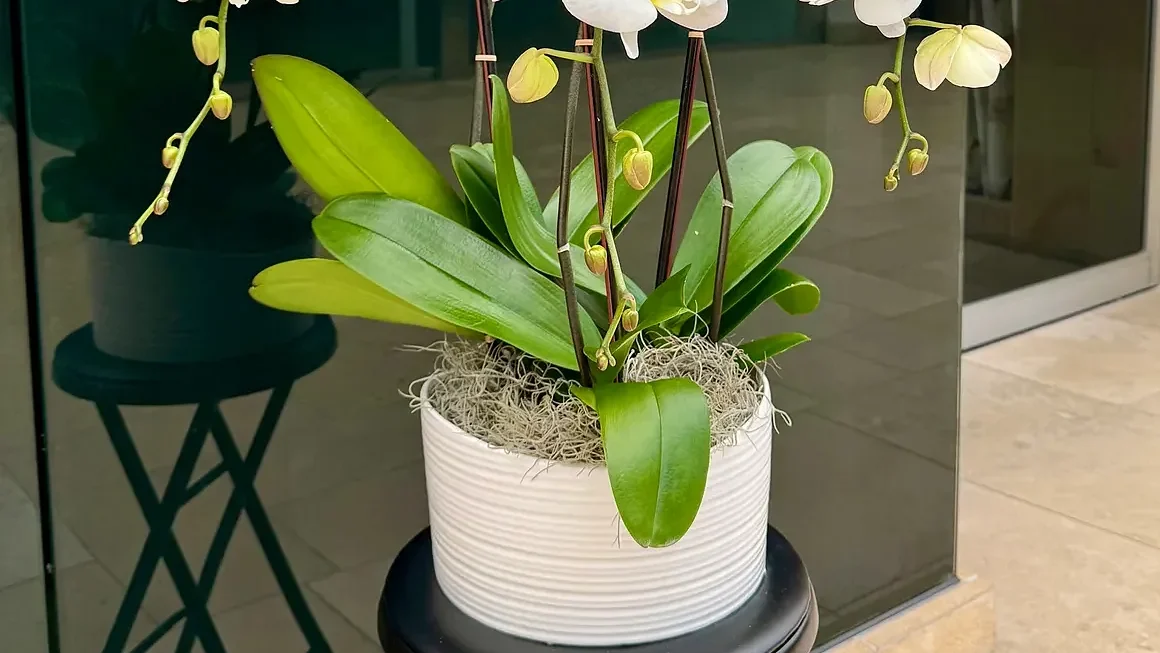
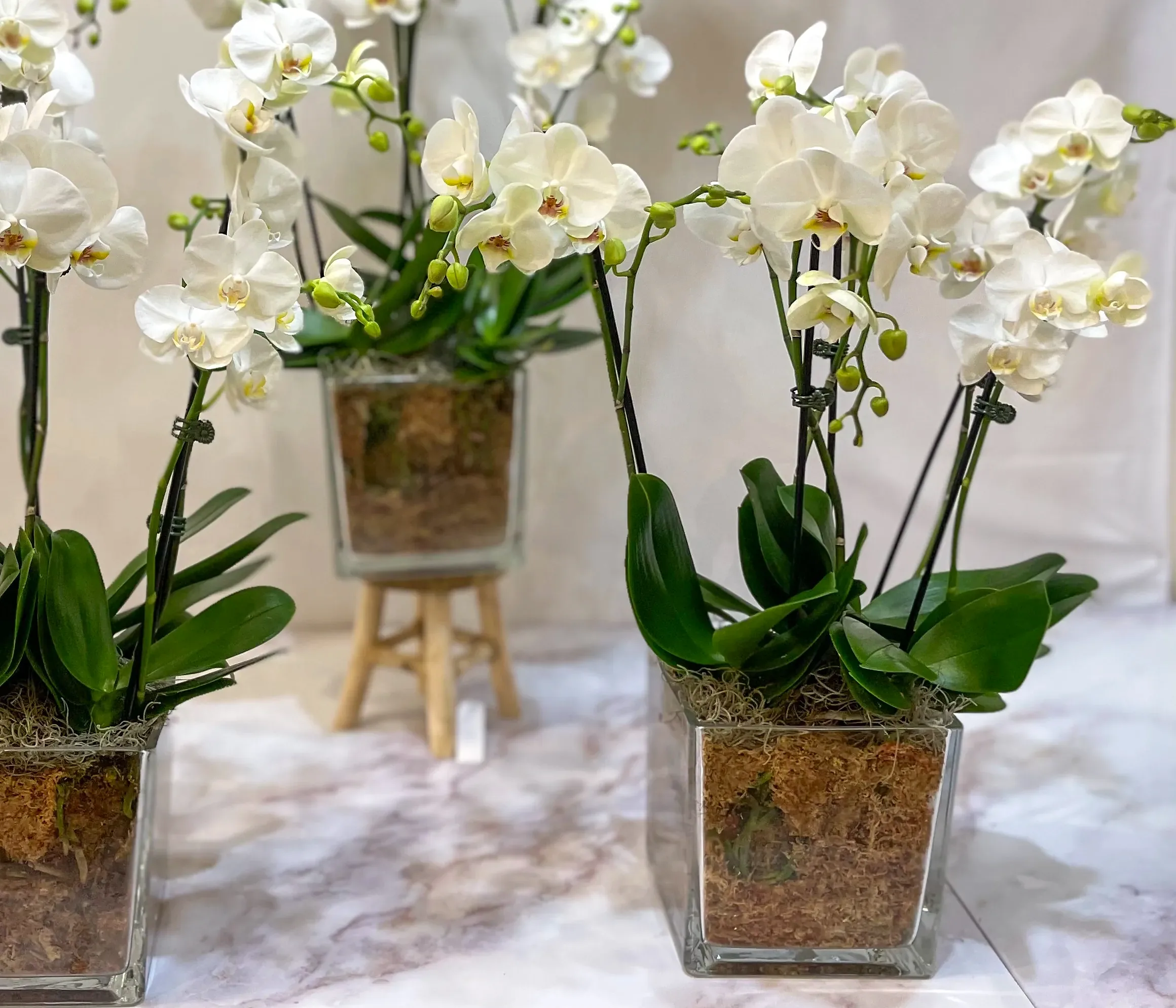
A clear pot helps with Phalaenopsis. It lets light reach the roots and lets you watch moisture and root color between waterings.
How to repot an orchid, step by step
Work gently and take your time.
- Slide the plant out. Squeeze a plastic pot to loosen the roots. Tease them free of the old bark.
- Clean the roots. Rinse off old mix. Trim any soft, brown, hollow roots. Keep the firm green and silver ones.
- Position the plant. Set it in the new pot with the base of the leaves at the rim. Old, high roots settle around the top.
- Add bark. Pour pre-soaked bark around the roots. Tap the pot to fill gaps. Firm it lightly so the plant stands on its own.
- Wait to water. Give it a few days before the first light watering. Fresh cuts need to seal.
The plant might sulk for a week or two. New root tips are the sign it has settled in.
Common repotting mistakes
A few slips catch people. A pot two or three sizes up holds a swamp of wet bark around thin roots, so go one size up only. Regular soil smothers orchid roots, so stick with bark. Burying the crown invites rot, so keep it at the surface. And repotting a happy, blooming plant for no reason costs you the flowers.
If the roots look healthy and the mix still drains, leave the plant alone.
After the repot
Set the plant back in its usual bright, indirect light. Water lightly for the first few weeks, then return to your weekly rhythm. Hold off on fertilizer for a month while the roots recover. New leaves and root tips tell you the move worked.
What potting mix to use
Bark mix is the standard for a reason. A medium-grade fir bark blend drains fast and lets air reach the roots, close to how orchids grow on trees. Many blends add perlite or charcoal for drainage and freshness. Reach for a bag labeled for orchids rather than standard houseplant soil.
Sphagnum moss holds more water and suits growers with a light touch or an especially dry home. In humid Sarasota, moss stays wet longer, so bark is the safer pick for most people. Whatever you choose, soak it before potting so it takes up water evenly.
How often to repot
Plan on fresh bark every one to two years. Bark breaks down over time, losing its air pockets and holding water like soil. Once it looks dark and crumbly, the plant is due, even if the roots have room.
Time the job for spring, after blooming, when new roots appear. A plant in active growth recovers fastest. Skip repotting in the middle of a bloom unless the roots are rotting, since the move drops flowers early.
A quick health check while you work
Repotting is a good moment to read the plant up close. Look at the roots, count the healthy ones, and check the crown for any soft spots. Firm roots and a clean crown mean a strong plant. Trim what is dead, note what looks weak, and give the plant fresh footing for the year ahead.
Tools worth keeping on hand
A small orchid kit saves time. Keep sharp scissors, rubbing alcohol to clean them, a bag of fresh bark, a clear spare pot or two, and a little cinnamon for cut roots. With those on a shelf, a repot takes minutes and you never put off a job the plant needs. Clean tools matter most, since a wiped blade keeps rot and disease from spreading between plants.
Not sure whether it is time? Bring the plant to the shop in Sarasota and we will check the roots with you, or repot it into a vessel you love.
Keep reading: how to water an orchid, the right container, and the Orchid Care page.

Have an orchid question? Come see us.
Stop by the shop in Sarasota or send a note — we love talking orchids and helping yours thrive.
Visit the shop