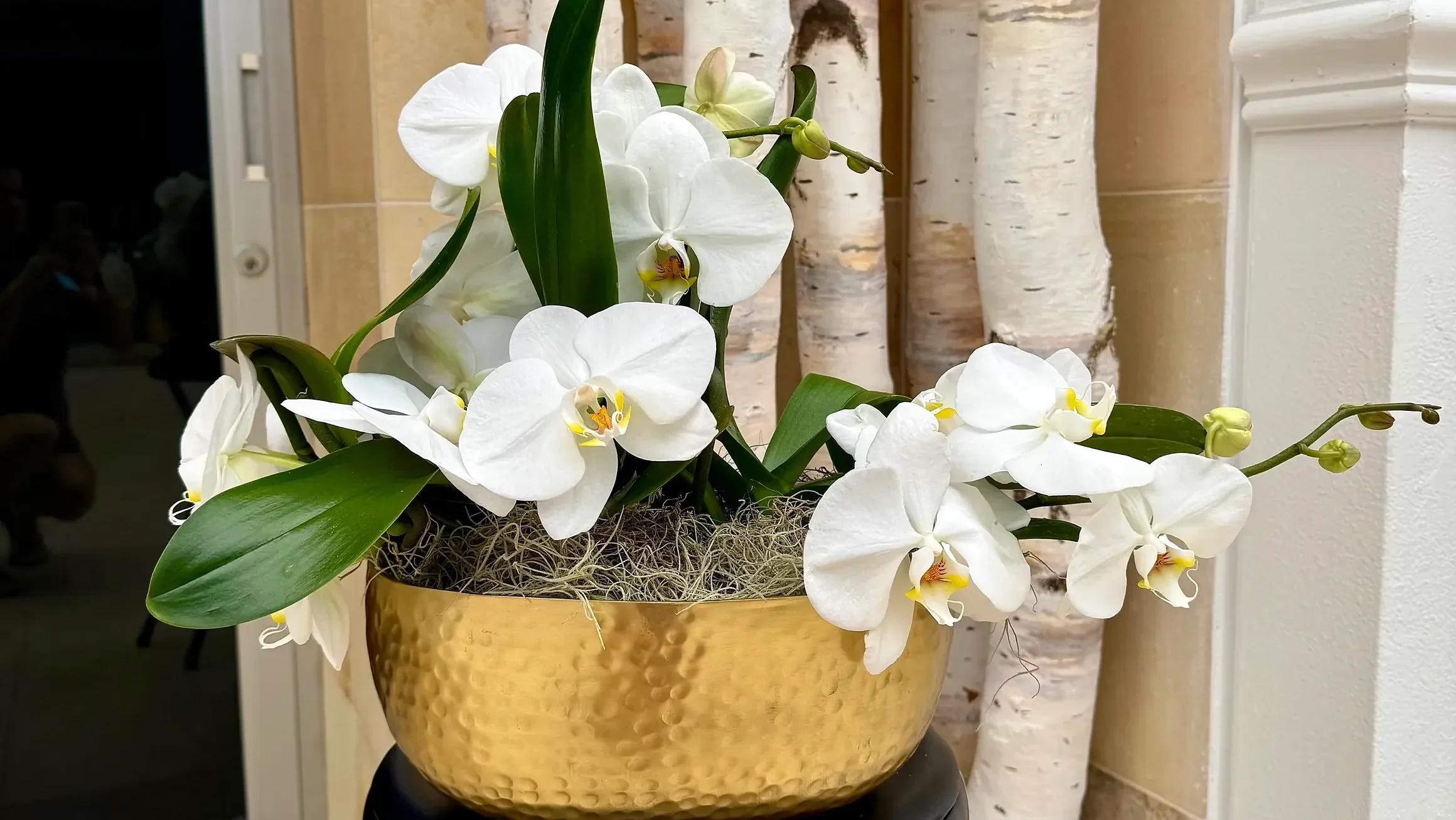
How to Water an Orchid Without Killing It
Most orchids die from too much water, not too little. Water once a week, let the roots dry between drinks, and never leave the pot sitting in a saucer of water. Follow those three habits and your orchid will keep going for years.
Overwatering is the top reason a healthy orchid fails. The roots stay wet, they rot, and the plant starves while it looks like a drink is the fix. The trick is to water well, then let the plant breathe.
How often should you water an orchid?
Once a week suits most homes in Sarasota. Orchid roots need air as much as water. A weekly soak, followed by a dry stretch, matches how these plants live in the wild, clinging to trees where rain comes and goes.
Your room sets the pace. A bright, warm spot dries out faster, so the plant might want water every five or six days. A cool, shaded room holds moisture longer, so ten days between waterings works better. When you are unsure, wait a day. A thirsty orchid recovers fast. A drowned one does not.
The right way to water an orchid
Water at the sink, not with a splash from a cup. Run room-temperature water through the pot for fifteen or twenty seconds. Let it pour out the drainage holes. Then let the pot drain fully before it goes back on its spot.
Keep water off the crown, the center where the leaves meet. Water pooling there leads to rot. If a few drops land, dab them dry with a paper towel. Skip ice cubes. The cold shocks tropical roots, and the melt gives too little water anyway.
How to tell when your orchid needs water
Look at the roots and the pot. In a clear pot, silver or gray roots mean the plant is ready for water. Green roots mean it still holds plenty. Lift the pot too. Light and dry means water. Heavy means wait.
The potting bark tells you as well. Dry, loose bark on top points to a drink soon. Damp, dark bark means hold off. Over a few weeks you will read your own plant without thinking about it.
Does the pot matter?
Yes. A pot with drainage holes is not optional. Many orchids sell in a plain plastic grow pot inside a decorative sleeve. Lift the inner pot out to water, let it drain, then set it back in the sleeve. Never let water collect in the bottom of the sleeve.
Bark mix beats regular potting soil every time. Soil holds too much water around orchid roots and smothers them. If your plant came in moss and stays soggy, treat it as a sign to repot into bark once it finishes blooming.
Signs you are overwatering
Soft, brown, mushy roots are the clearest warning. Healthy roots feel firm and look green or silver. Yellow lower leaves and a wobbly base point the same way. If you find rot, trim the dead roots with clean scissors and let the plant dry out before the next water.
Wrinkled leaves confuse people here. They look like thirst, but they often follow root damage from too much water. The roots no longer drink, so the leaves go soft. Check the roots first. Read more in our guide on reading your orchid’s leaves.
A simple weekly rhythm
Pick one day a week as orchid day. Carry the plant to the sink, water for twenty seconds, let it drain, set it back. Two minutes, once a week. Adjust by season. Summer heat speeds things up. Winter cool slows them down.
Skip fertilizer worries for now. A weak orchid feed once a month in spring and summer is plenty. Water is where most people go wrong, so start there.
What water works best
Room-temperature water is the goal, whatever the source. Cold water shocks tropical roots, so let tap water sit out for an hour or run it until it feels neutral on your wrist. Most Sarasota tap water suits orchids fine.
Rainwater is a nice bonus if you collect it, since it is soft and free of additives. Distilled water works too. Skip water run through a salt-based softener, since the added sodium builds up in the bark and burns the roots over time. If you have a softener, draw water from an outside spigot or a bypass tap instead.
One more note on quantity. Water until it runs freely from the drainage holes, then stop. A thorough soak wets every root. A quick splash wets only the top and leaves the lower roots dry. Soak well, drain fully, and wait for the next dry stretch.
Water light, let the roots breathe, and keep it off the crown. Bring us a photo if the roots look off, or visit the shop in Sarasota and we will look together. You will find us on South Washington Boulevard.
Keep reading: the Orchid Care page.

Have an orchid question? Come see us.
Stop by the shop in Sarasota or send a note — we love talking orchids and helping yours thrive.
Visit the shop